
Device Form Factor Matters
Damaging one phone opens the moment for another smaller phone.

I’m part of that strange cult that swears by naked phones. I hate using a case. My cell phone is quite large as-is, and a case adds bulk. I prefer that my pants pockets not seem like they’re stuffed full of Amazon delivery boxes.
But, I also don’t prefer to admit that I crack my phones. Often.
How? Sometimes I drop them. We’re all human. At least one instance of cracks happened because someone else dropped my phone. I’ve dropped or damaged many devices - an iPhone SE, iPhone XS (first larger screen for me), iPhone 12 mini, and my more recent iPhone 15 Pro (twice now).
That last model suffered yet another moment of abuse this past weekend. What happened suggests that I should write copy for mobile devices maker ads. My phone slipped out of my right pocket while I was driving. Somehow, it lodged itself between the seat belt latch - next to seat cushion - and my right thigh bone. Then I entered a left turn (body moving right) and shifted and bent the phone around the seat belt latch and my thigh.
I should stop working out.
I didn’t notice the above sequence as it happened. Instead, I looked for absent phone after I stopped driving and was exiting the car. It was then that I pulled the semi-conscious cracked titanium and glass skeleton from its hiding spot and said, well, fuck.
As one does in that moment.
My iPhone 15 Pro was on, and the screen showed stuff, but was unusable. The worst facts combined: I couldn’t slide or tap much of anything on the screen - nothing registered. So, I both couldn’t use the phone to do anything and also couldn’t slide to turn it off. You sigh a lot in the moment.
My other challenge in the moment: travel. I was across the country, far away from home. What would I do?
I decided that I would survive without that phone. My wife was with me, and I also traveled with my laptop. So, anything urgent would fall to her, and I could otherwise monitor my life during brief laptop stints in my hotel room.
A lucky break came not from something random, but instead time-worn habit: I often travel with my previous phone: the iPhone 12 Mini. I use it most nights to play podcasts as I start every night’s beauty sleep.
So, I possessed a mobile lifeline - my iPhone 12 Mini, and hotel Wifi. I could stay connected enough to be semi-reachable. Like most days!
Moving from one handheld device to another isn’t often a momentous occasion. The iPhone 15 Pro and iPhone 16 Pro, as examples, are very similar in width, height, and depth. Upgrading to a 16 from a 15 is a mere blip on your brain.
But moving from a larger handheld to a smaller handheld is a bizarre experience. Everything is smaller.
Your eyes strain more (at least mine do) to decipher your texts, emails, and mean tweets. Your pocket is free and open, willing to accept other items (money, tic-tacs, key-fobs) that you stuffed into your butt pockets, or a vest, bag, or purse.
And, in the specific example here (iPhone 15 Pro → 12 Mini), you’re transporting a much lighter device. Most important: the phone fits my hand better - my thumb manages to navigate most of the phone screen without requiring regular finger yoga.
So, recent news of alleged delay in the next iPhone Air sparked my curiosity. The iPhone Air is Apple’s slimmest and lightest current phone. But its screen is the second largest in the lineup at 6.5” of diagonal width - slotting in between the iPhone 17 Pro Max (6.9”) and iPhone 17 Pro (6.3”).
My devices are smaller:
iPhone 15 Pro - 6.1”
iPhone 12 Mini - 5.4”
The iPhone 12 Mini is tiny in hand compared to the iPhone Air. It’s also much lighter, weighing 4.76 ounces compared to the Air’s 5.82.
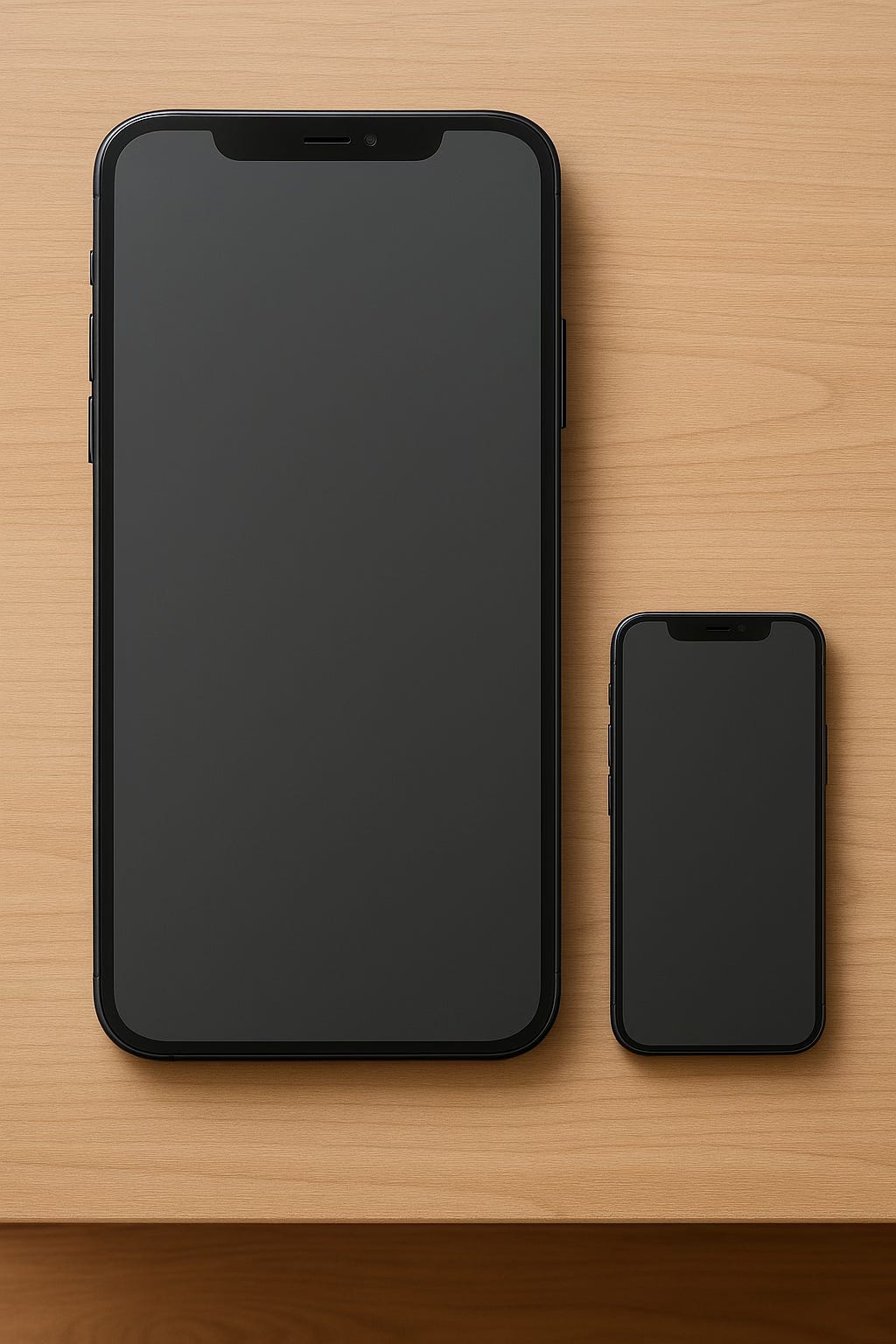
These differences beg the question: what devices do people want? From the Verge’s summary post covering The Information’s paywalled article:
Apple is no longer planning to launch a second-generation iPhone Air next fall and has “already sharply scaled back production of the first version,” The Information reports. The next Air is instead likely to launch in spring 2027 at the earliest, and will be upgraded with a second camera lens, according to a follow-up Information report.
The company launched the super-thin version of the iPhone in September, but it seemingly hasn’t proven to be a big hit, and Apple is apparently making some changes to its plans for the phone’s follow-up.
We will see what rumor manifests as reality, but let’s assume The Information and The Verge covered something real. The headline implies that the iPhone Air hasn’t sold as well as Apple forecasted. Or, it’s not selling as well as external analysts think it should. Apple-focused buyers may be choosing other devices like the iPhone 17 Pro and Pro Max.
Their screens are larger, frames heavier, but there are two other important differences:
Larger phones have larger batteries and longer battery life
Larger phones provide more room for camera components, meaning owners use higher-quality cameras for candids and selfies.
The Air sought to appease dimension-conscious buyers with its larger screen and Weight Watchers diet.
But did Apple and other device makers zoom right over the point with in their pursuit of larger and slimmer?
I’m on day 2 of a full-function iPhone 12 Mini after transferring my cell service. And I’m again remembering why I chose this device despite larger options. The weight doesn’t annoy me, and the frame fits well in my pocket. I don’t need some sort of purse or bag to transport the phone if I’m wearing slimmer pants (I do).
My gut tells me I’m the minority opinion on this matter. Lots of people love pretending their phones are iPads.
What do you think? Is a larger phone better? Smaller? What do you prioritize?
You can take my 13 mini from my cold, dead hands. Apple knows there’s a ton of us who want smaller phones (they have the data). If the Light Phone 3 gets built out to run a few more critical apps I suspect a bunch of iPhone mini users would be gone immediately.
Just rawdoggin that phone with some loose TicTacs in your pocket!